
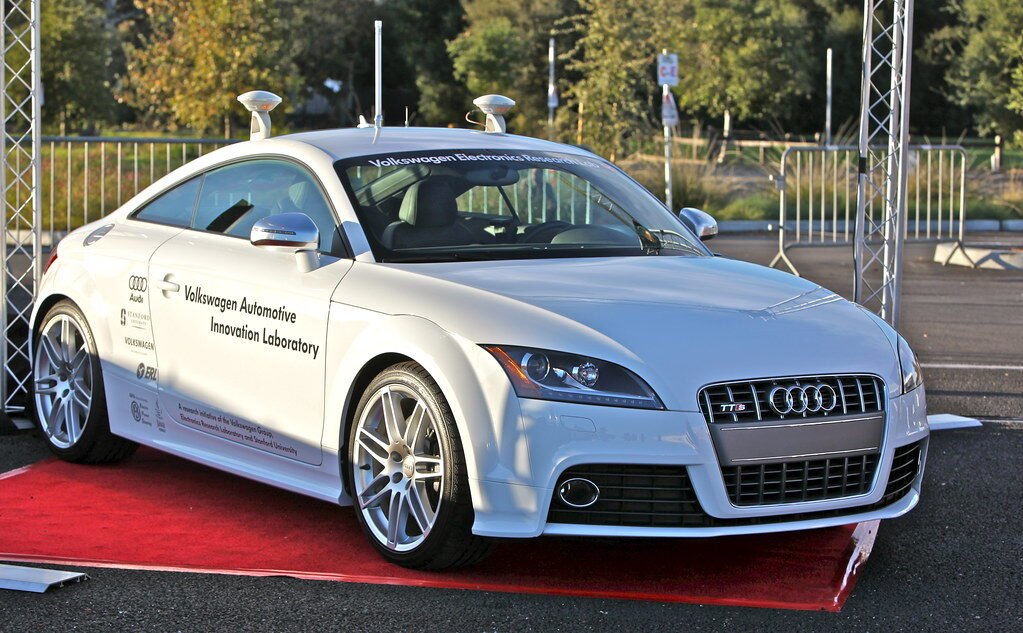
Autonomous vehicle (AV) technology, commonly known as self-driving cars, has evolved from science fiction to an imminent reality. With major players like Tesla, Waymo, Cruise, Zoox, Mobileye, and Chinese giants such as Baidu Apollo and XPeng pushing the boundaries, 2025 marks a pivotal year where robotaxis are already operating commercially in multiple cities and Level 4 autonomy is no longer a prototype dream.
This comprehensive guide covers everything you need to know about autonomous vehicle technology in 2025–2026: how it works, current levels of autonomy, key components, leading companies, challenges, benefits, and what the near future holds.
What Are Autonomous Vehicles?
An autonomous vehicle is a car, truck, or shuttle capable of sensing its environment and operating without human involvement. Passengers may set a destination, but no active driving, steering, or braking input is required.
These vehicles rely on a combination of sensors, powerful computing platforms, artificial intelligence, and high-definition maps to perceive the world, predict behavior of other road users, plan a safe path, and execute driving maneuvers.
SAE Levels of Driving Automation (2025 Update)
The Society of Automotive Engineers (SAE) defines six levels of driving automation, from Level 0 (no automation) to Level 5 (full automation anywhere).
| SAE Level | Name | Human Role | Real-World Status (2025) |
|---|---|---|---|
| Level 0 | No Automation | Full control | Traditional cars |
| Level 1 | Driver Assistance | Hands on wheel, assists one task | Adaptive cruise control |
| Level 2 | Partial Automation | Hands-off, feet-off (supervised) | Tesla Autopilot, GM Super Cruise, Mercedes Drive Pilot |
| Level 3 | Conditional Automation | Can fully drive in specific conditions, driver must be ready to intervene | Mercedes S-Class & EQS (Germany & select US states), Honda Legend |
| Level 4 | High Automation | No driver needed in operational domain | Waymo (Phoenix, SF, LA, Austin), Cruise (limited), Baidu Apollo Go (Wuhan, Beijing), WeRide |
| Level 5 | Full Automation | No human intervention ever required | Not yet deployed commercially |
As of late 2025, Level 4 robotaxis have logged over 50 million autonomous miles in the U.S. and China combined.
Core Technologies Behind Autonomous Driving
- Sensors – The Eyes and Ears
- LiDAR (Light Detection and Ranging): Creates 3D point clouds; dominant in Waymo, Cruise, and most Chinese players.
- Radar: Excellent for speed and distance measurement in all weather.
- Cameras: High-resolution vision for reading signs, detecting traffic lights, and lane markings (Tesla’s vision-only approach).
- Ultrasonic sensors: Short-range parking assistance.
- IMU & GPS/GNSS: Precise positioning and motion tracking.
- Computing Hardware
- Tesla: Custom Dojo supercomputers and HW4/HW5 (AI5) chips with >1,000 TOPS.
- Waymo: 6th-generation compute platform (2024–2025).
- NVIDIA DRIVE: Orin (254 TOPS) and Thor (1,000+ TOPS) powering Mercedes, Volvo, Zoox, XPeng, NIO, Li Auto, etc.
- Horizon Robotics & Huawei Ascend: Dominant in Chinese OEMs.
- Perception & Machine Learning
- Object detection & classification (cars, pedestrians, cyclists, animals).
- Semantic segmentation and lane detection.
- Transformer-based neural networks (occupancy networks, BEV – Bird’s Eye View).
- Prediction & Planning
- Predicting trajectories of other road users up to 8–10 seconds ahead.
- Motion planning with safety buffers (RSS – Responsibility-Sensitive Safety by Mobileye).
- High-Definition Maps
- Centimeter-accurate 3D maps updated daily (Waymo, Mobileye REM, Baidu, HERE, TomTom).
- Redundancy & Safety Systems
- Dual/triple redundant braking, steering, power, and compute.
- Over-the-air (OTA) software updates.
Leading Companies & Deployments (November 2025)
- Waymo (Alphabet): 200,000+ paid robotaxi rides/week in Phoenix, San Francisco, Los Angeles, and Austin.
- Cruise (GM): Resumed supervised testing after 2023 incident; limited driverless operations in Phoenix and Dallas.
- Baidu Apollo Go (China): Largest robotaxi fleet globally (>6 million rides).
- WeRide, Pony.ai, AutoX: Expanding Level 4 in Guangzhou, Shenzhen, Beijing.
- Tesla: Full Self-Driving (FSD) Supervised v13 (2025) shows strong performance; Robotaxi “Cybercab” unveiled October 2024, production planned 2026–2027.
- Zoox (Amazon): Purpose-built bidirectional robotaxi testing in Las Vegas and Foster City.
- Mobileye + Volkswagen: Planning European robotaxi launch 2026.
Benefits of Autonomous Vehicles
- Safety: 94% of crashes are due to human error (NHTSA). AVs don’t drink, text, or fall asleep.
- Efficiency: Reduced traffic congestion through platooning and optimized routing.
- Accessibility: Mobility for elderly, disabled, and those unable to drive.
- Economic: Lower cost per mile for robotaxi fleets (estimated $0.30–$0.50/mile vs $1+ for Uber today).
- Environmental: Smoother driving + electrification = lower emissions.
Challenges & Hurdles Remaining
- Edge Cases & Rare Events: Snowstorms, construction zones, erratic human drivers.
- Regulation: U.S. NHTSA and state-by-state approvals; China is fastest-moving.
- Public Trust: High-profile incidents slow acceptance.
- Cybersecurity: Protecting vehicles from hacking.
- Liability: Who is responsible when a Level 4 car crashes?
The Road Ahead: 2026–2030 Predictions
- 2026: Multiple cities in U.S., China, UAE, and Europe will have 24/7 driverless robotaxi services.
- 2027–2028: Personal ownership of Level 4 vehicles becomes viable (Tesla Cybercab, Chinese OEMs).
- 2030: McKinsey estimates 15–20% of new vehicles sold could be Level 4+ capable.
- 2035+: Level 5 possible with continued advances in AI and infrastructure.
Conclusion
Autonomous vehicle technology is no longer “five years away” — it’s here today in limited but rapidly expanding geographies. Waymo, Baidu, and others have proven Level 4 autonomy works at scale. The combination of massive real-world data, transformer-based AI, and purpose-built hardware is closing the gap to full autonomy faster than most analysts predicted even two years ago.
Whether you’re an investor, policymaker, urban planner, or simply curious about the future, the transformation of transportation has begun. The next decade will see the most significant shift in mobility since the Model T.
Stay updated — the era of self-driving cars is accelerating.
Tags: autonomous vehicles, self-driving cars, robotaxi, Waymo, Tesla FSD, Level 4 autonomy, LiDAR vs vision, future of transportation, AV technology 2025